
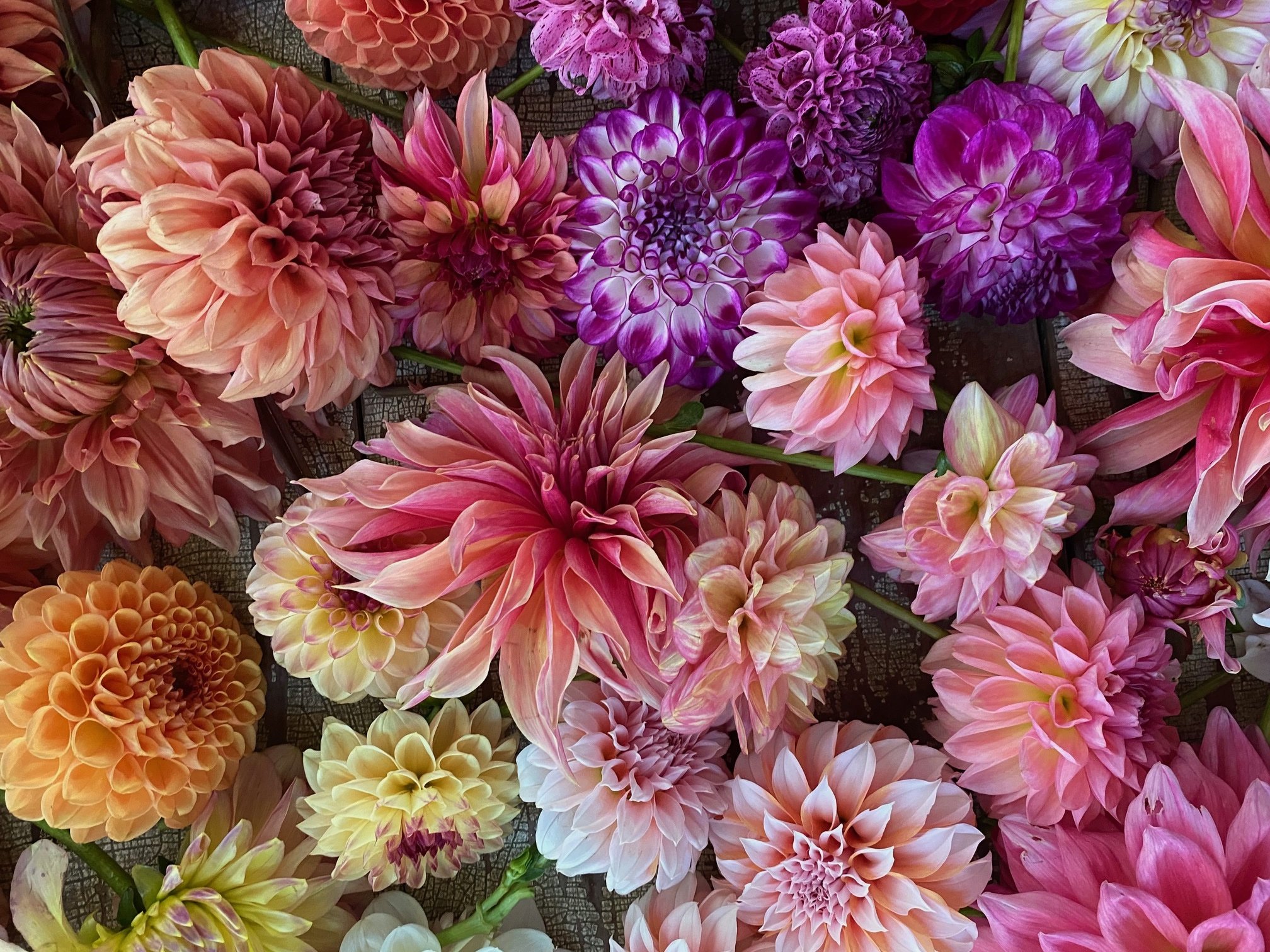
Planting Dahlia Tubers
Spacing
Depends on tuber size:
Small tubers: 12 inches apart
Medium tubers: 18 inches apart
Large tubers: 24 inches apart
Clumps: 24 inches apart or more
Preparing the Hole
Dig a hole 6 inches deep, OR dig a continuous trench 6 inches deep along a row
Add a small handful of organic compost and a teaspoon or so of organic amendment (organic Bulb-Tone)
Mix compost and Bulb-Tone into the soil before planting
Placing the Tuber
Place the tuber with the eye facing up
Ensure the eyes are positioned so that all tubers face the same direction and plants grow evenly and spacing remains consistent
If the Tuber Has Sprouted
If the eye has already sprouted, that is perfectly fine
Plant the tuber so the tip of the growth remains above the soil line
Long Sprouts
If the sprout is long, trim it, as it may otherwise break. Leave an inch or so of growth
Ideally allow the cut to heal for a day before planting
If a sprout breaks, don’t worry — the plant will grow again, it will just take longer
Covering the Tuber
Cover up the hole with soil
Do not pack the soil down
Irrigation
Before Growth
Set up drip irrigation before planting if you have drip
Also set up overhead irrigation
Do not water immediately after planting, especially if rain is expected
Wait to water until visible growth appears
Early Growth
Use overhead irrigation until plants become too tall for water to get through the leaves.
If there is no rain:
Water once per week
Up to 30 minutes per session
Avoid overwatering — tubers can rot and turn to mush
Established Plants
Once plants are growing well:
Water 1–2 times per week, depending on heat and dryness
Approximately 30 minutes per session
Soil should be moist but never soggy.
Plant Care
Pinching
When the first flower bud forms in the center, pinch it out.
This encourages branching and more blooms.
(It’s hard, but do it!)
Pruning
Remove lower leaves as plants grow to improve airflow and plant health.
Pest Management
Gently hand-pick Japanese beetles DAILY and remove them from the plants. Don't be shy… they will damage your blooms. Drop them in a jar of warm soapy water.
Support
Dahlias can grow quite tall and produce heavy blooms, so providing support keeps stems straight, prevents breakage in wind or rain, and makes harvesting flowers easier. There are several common support methods, and the best one depends on how many plants you have, spacing, and how intensively you grow them.
1. T-Post and Twine System (Best for Rows)
2. Horizontal Netting (Hortonova ) - This is what we use on the farm (see below)
3. Individual Stakes (Best for Small Gardens)
4. Tomato Cages (Best for Large Decorative Dahlias)
For more details on supporting your dahlias you can peek online using any of the keywords above.
Veggies to Table Support Netting - how we support the dahlias that we grow here on the farm in 30' rows
Bed Preparation
We plant our dahlias in 30-inch beds with two rows per bed.
Install T-posts before planting:
Place posts 10 feet apart
Posts should face each other across the bed exactly 30 inches apart
Ensure all posts run in the same direction, with the eyes facing the outside the bed
Install one layer of Hortonova netting:
Position netting approximately 2 feet above the ground
Attach securely to the T-posts
Make sure the netting is tight. This is key to the success of supporting the plants
Of Note: Use one continuous 100-foot piece of netting, do not skimp. This is not the place for it. Do not use multiple small sections.